
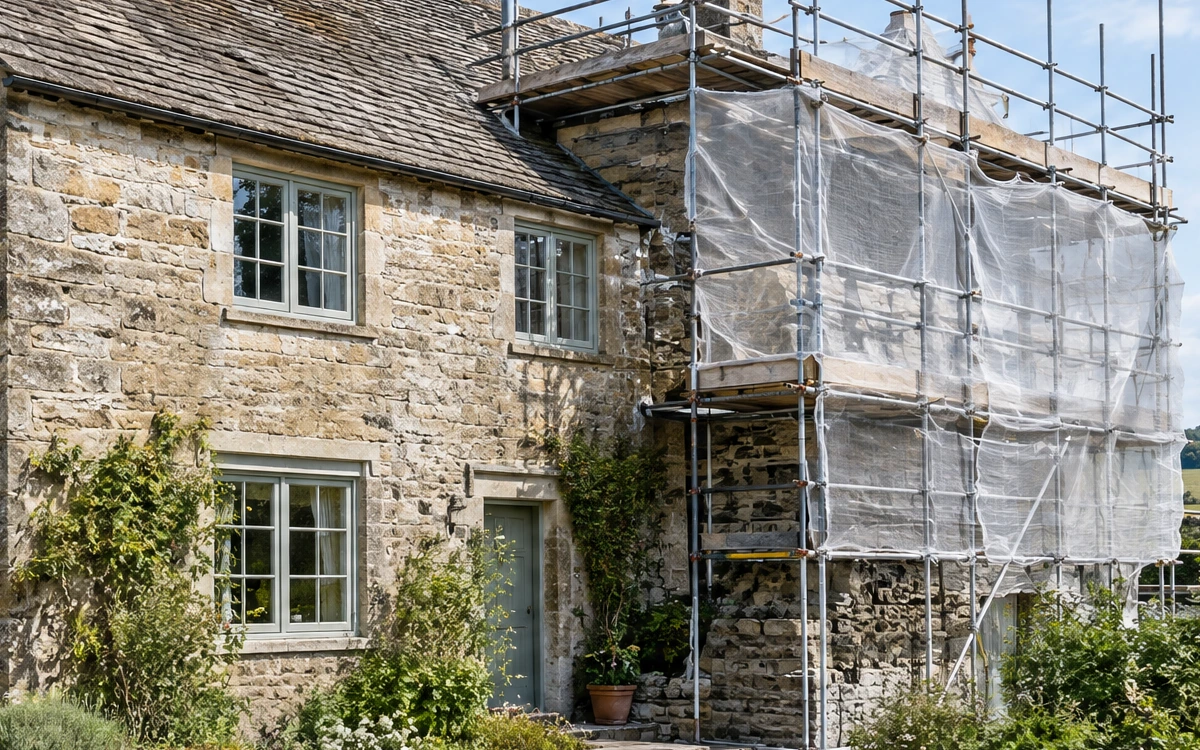
Construction
An old building doesn't need protecting from change. It needs the right change, applied by people who understand why it was worth keeping in the first place.
Understand what you're extending before you decide how
Before anything gets designed, the building has to be understood properly: how it was built, what condition it's actually in beneath the surface, which parts of it genuinely matter and which don't. Skipping that step doesn't save time. It just moves the cost of finding out further down the programme, where it's harder and more expensive to deal with.
Contrast nearly always beats imitation
Imitation is the instinct most people reach for first when extending something old, and it's usually the weaker choice. A new addition that's honestly modern (glass, steel, a flat or simple roofline) tends to sit more comfortably next to a period structure than one that tries, imperfectly, to copy its detailing. Each part of the building reads clearly for what it is, and the whole is stronger for the contrast.
Material honesty does more work than matching ever will
Stone, timber, glass and metal used honestly age well and read as what they are. A material palette carried through consistently from the old fabric to the new, rather than disguised to match it exactly, unifies a building far more convincingly than brick-for-brick matching ever manages.
The constraints that matter won't show up on a survey
Structural quirks, services that don't go where the drawings say, nothing quite as level or square as assumed. Existing buildings come with risks that only surface once work starts. A contractor who has genuinely worked on period and existing buildings before has planned for that reality rather than discovering it mid-project, at the client's cost.
Done well, none of this reads as compromise. The building gains the light, space and function it was missing, and keeps everything that made it worth extending rather than replacing.